
Dressing for the Room You Want to Be In
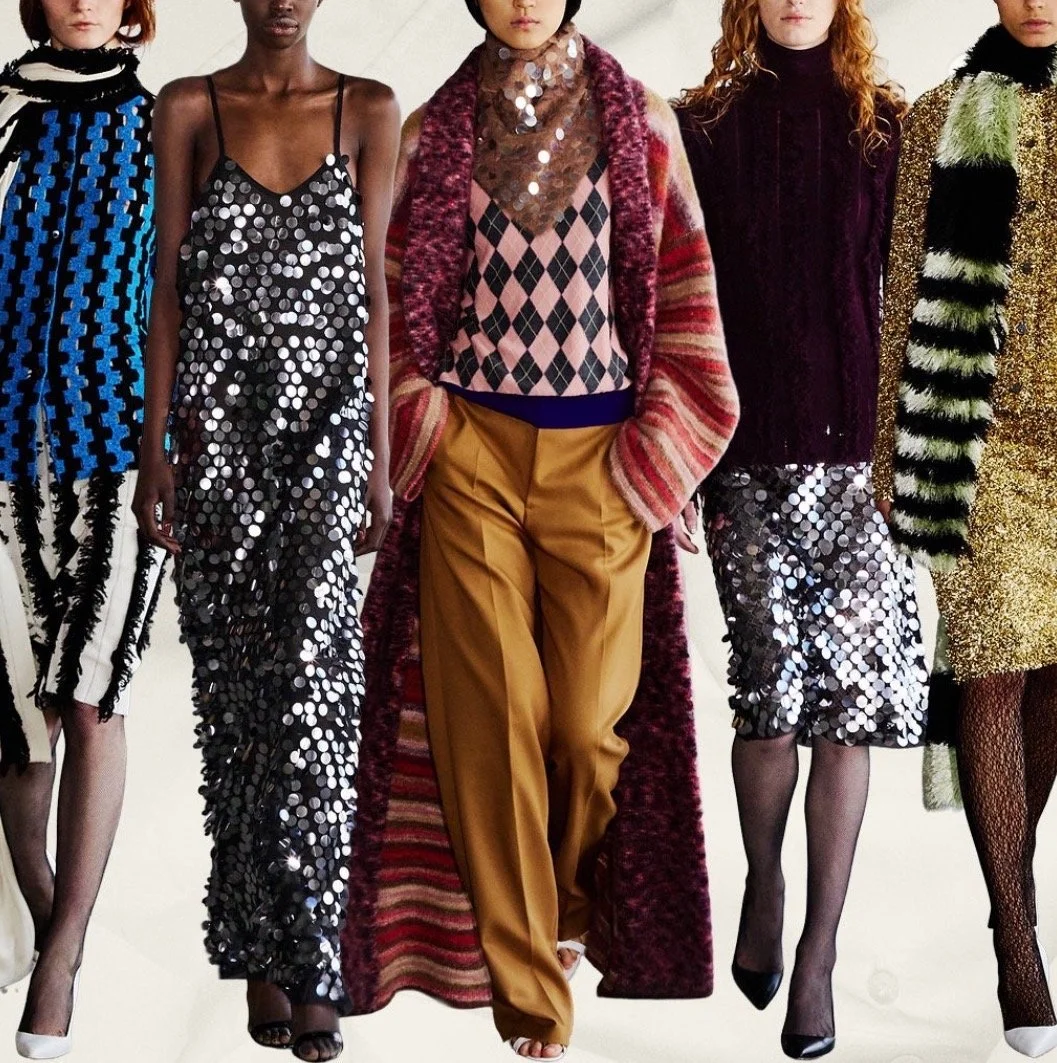
Power dressing didn’t disappear. It just stopped needing to announce itself.
There was a moment — let’s say somewhere between the Clinton administration and the first iPhone — when power dressing had a very clear uniform. Shoulder pads. A structured blazer that meant business in the way a handshake meant business. The message was external, declarative, slightly combative. I am here. Take me seriously.
That energy isn’t gone. But the runways in Milan and Paris this season made one thing unmistakably clear: the way we dress for power has evolved. It’s less about armor now, and more about alignment. Less about what you’re projecting out, and more about what you’re standing in. The shift is subtle, but it’s everything.
The Shoulders Are Back. But They’re Different Now.
Yes, the power shoulder returned. But if you looked closely at what came down the runways in Milan — at Prada, at Versace, at BOSS — you’d notice something had changed in the translation. The silhouette was still commanding, still structured. But it wasn’t aggressive. It was, to borrow a phrase from Mytheresa’s buying team, “softened yet commanding.”
That particular pairing — soft and commanding — is the whole conversation right now. The woman these clothes are being designed for doesn’t need her blazer to do the talking. She’s already in the room. She’s already at the table. What she needs is to feel entirely herself while she’s there.
Max Mara made this argument most poetically. Creative director Ian Griffiths built his Fall 2026 collection around Matilde di Canossa — an 11th-century diplomat and military commander who ruled vast territories of Italy. A woman of extraordinary power who history largely underestimated, from an era people have largely misunderstood. His point was quiet but precise: real authority doesn’t need to be loud. It just needs to hold its shape.
Prada Rewrote the Rulebook (Again)
If there’s one house that consistently makes dressing feel like a philosophical act, it’s Prada. Miuccia Prada and Raf Simons’ Fall 2026 show was a live-action exercise in the layered logic of getting dressed. Coats disappeared. Dresses revealed themselves. Looks built and unbuilt across multiple passes on the runway.
The underlying question wasn’t “What should I wear?” It was “How many ways can I exist in this?” And that’s a very different kind of power. It’s versatility as strength. Practicality as point of view. The modern woman’s perpetual negotiation between what a day demands and who she actually is.
This is where I think the real shift lives. Power dressing used to be about presenting a fixed self — one strong, legible image. What Prada (and much of thisseason) is arguing instead is that power is fluid. It adapts. It layers. It knows which version of itself the room needs, and shows up accordingly.
Utility Is the New Luxury. And Luxury Is the New Utility.
One of the quieter but more significant stories from Milan’s SS26 runways was the rise of utility fashion — not as workwear, not as streetwear, but as an aesthetic of intentionality. Prada, Fendi, Max Mara all leaned into it: structured shirting, functional pockets, hardware that earned its place rather than ornamented it.
The message embedded in this direction is one I’ve always believed in: your clothes should serve your life. Not the other way around. When a pocket is actually useful, when a belt actually holds something, when a coat can weather both a boardroom and a taxi in the rain — that’s power. Quiet, competent, completely at ease with itself.
Fendi’s Maria Grazia Chiuri — newly arrived at the house, returning to her roots in Rome — brought a similar sensibility to her debut. Scarves reading “Impact” and “Sisters.” Laser-cut leather. Baguettes that fit a laptop but still look like art.
This is dressing for real life at a high level. And that combination, when it works, is undeniable.
What This Means When You Get Dressed in the Morning
Here’s the part where I bring this back to your actual closet, because runway moments only matter if they translate. The idea of dressing for the room you want to be in isn’t about performing ambition or costuming yourself into someone else. It’s about dressing from a place of clarity. Knowing the version of yourself you’re stepping into that day, and choosing clothes that support her rather than contradict her.
Sometimes that’s a perfectly cut blazer in a neutral that says I’ve been thinking about this for years and I know exactly what I’m doing. Sometimes it’s a fluid trouser and a cashmere top that says I’m so comfortable in my own skin that I don’t need the clothes to work overtime. Both are power. Neither is performing.
What the runways are affirming is what I’ve always believed in the fitting room: the most compelling thing a woman can wear is something she’s fully inhabiting.
You can feel it instantly. The posture shifts. The breath slows. The room adjusts.
“Power dressing used to be about what others saw. Now it’s about what you feel. The runways caught up. The question is whether your wardrobe has.”
We are in an interesting moment — politically charged, aesthetically saturated, and genuinely fatigued by performance. What the best collections this season understood is that the antidote to all that noise isn’t more noise. It’s precision. It’s knowing. It’s dressing like a woman who has already decided who she is. And showing up to every room like she belongs there. Because she does.
Ready to dress from a place of clarity? Book a private styling session with Christina!