
When Fashion Was Filtered, Not Fed
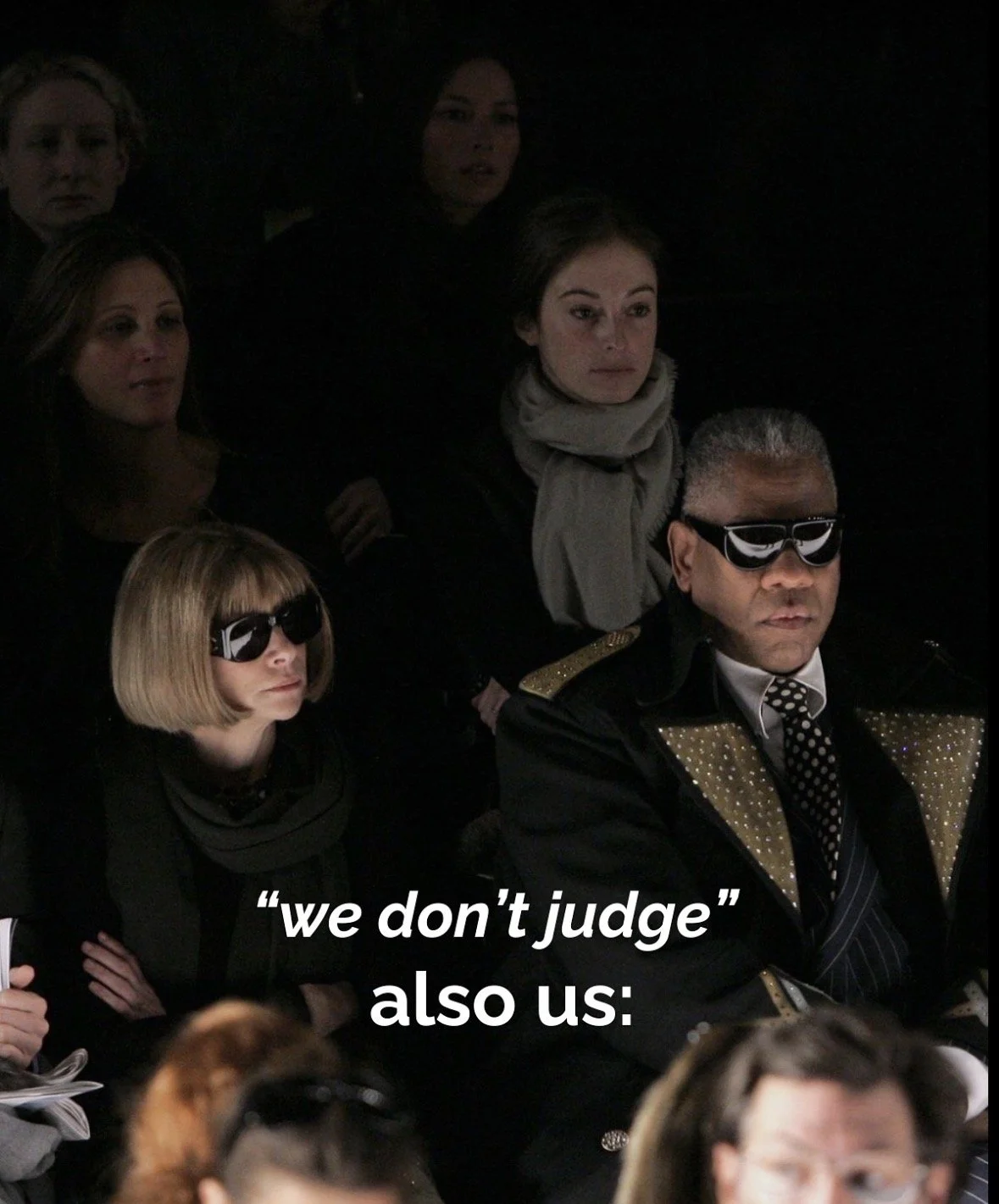
A Love Letter to Curation, Craft, and the Power of Restraint
Story time.
When I was just 20 years old, I lived through one of the most influential eras in modern fashion. The early 2000s were a completely different world—one that feels almost unrecognizable compared to today’s industry.
Back then, fashion operated within a tightly held ecosystem. Runway shows weren’t content opportunities; they were professional spaces. An invitation was earned, not requested—reserved for editors, buyers, stylists, creatives, and industry insiders whose work directly shaped what would land in stores, magazines, and culture at large. Attendance signified authority, trust, and contribution—not reach.
Getting into a fashion show was harder than getting past Disco at Bungalow on a Thursday night—a true industry rite of passage. And I’ll never forget crushing a crisp, muddled cucumber-and-mint Christopher Street—my cocktail of choice—at Beatrice, dancing beneath that iconic disco ball while “Rebel Rebel” by Bowie blasted. Yes. That’s right—we did that.
Fashion weeks weren’t designed for virality. There were no phones raised mid-walk, no GRWM videos filmed on the curb outside, no front-row selfies posted in real time. Coverage arrived weeks—sometimes months—later, thoughtfully edited and carefully contextualized through magazines, lookbooks, and retail floors. The delay wasn’t a flaw; it was part of the mystique.
Designers spoke through collections, not captions. Stylists were the translators. Editors, the gatekeepers. Buyers, the bridge between runway fantasy and real-world wardrobes. Influence moved slowly, intentionally, and with a sense of permanence.
Kelly Cutrone’s recent viral video touches a nerve because it highlights this exact shift: fashion has gone from being filtered to being fed. Today, influence is measured in engagement rather than experience, access often outweighs expertise, and the runway has become just another backdrop for personal branding.
That doesn’t mean today’s landscape lacks creativity—it doesn’t. But something essential has been diluted. When everyone is invited, discernment disappears. When fashion is consumed instantly, it loses the space required to evolve thoughtfully.
What we’re witnessing isn’t just a change in technology—it’s a shift in values. The early 2000s prized curation, apprenticeship, and point of view. Now, speed and visibility dominate the conversation. Cutrone raises a critical point when she asks a few simple questions: do creatives today truly understand what goes into curating a collection? The history of the house? The symbols that define it—and the narrative woven into every season? Do they understand the why behind the vision, the story meant to pull you inside the mind of the artist?
People’s Revolution was an agency designers relied on to tell that story—to produce truly epic shows. From the music to the lighting, the teams in that office were deeply dedicated to the brand, the vision, and the values of the clients they represented. I remember my boyfriend at the time crawling out from under his desk around 2 a.m. to meet us for drinks at Rose—only to head straight back to work hours later. That was the level of commitment. That was the culture.
And maybe the real question isn’t whether one era was better than the other—but whether fashion can ever reclaim its sense of intention, restraint, and reverence while living in a world that demands constant output.
Because those of us who lived it remember:
fashion wasn’t louder then.
It was quieter. Sharper.
And far more powerful.