
Fashion 201: Managing Your Walk-In Like a Portfolio, Part Two
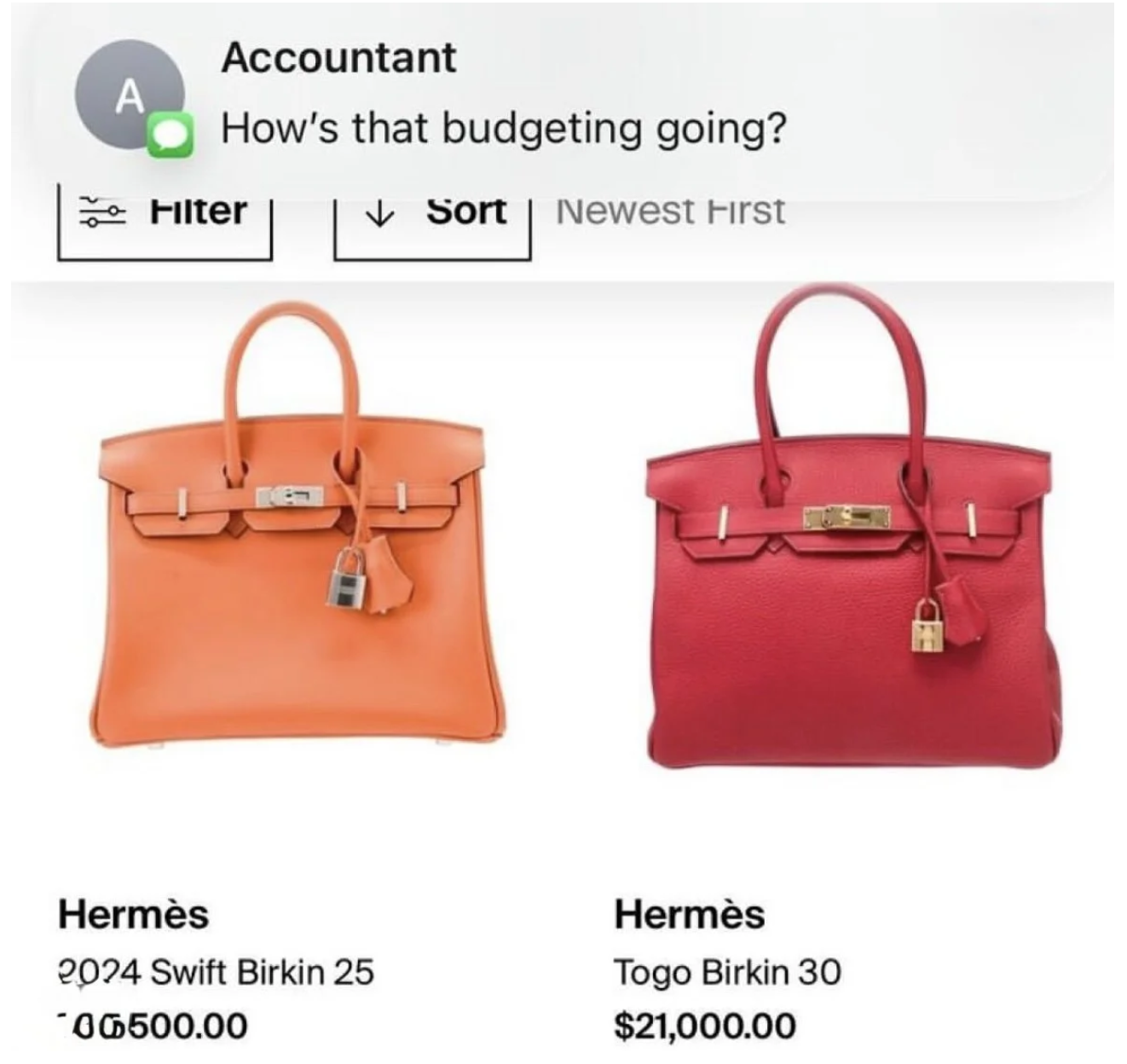
The Rebalance — What the Market Told Us This Summer, and What to Do About It
In May, I wrote about building a wardrobe the way you would build a portfolio: audit what you own, learn what holds value, and buy the next piece with the exit already in mind. That was the opening position. Your walk-in is your portfolio — and no serious portfolio is built once and left alone.
This is the second half of that conversation. The market moved this summer — more than I expected, and in a direction that rewards the women who were paying attention. So consider this your quarterly review. Here is what changed, what it means for what is hanging in your closet, and how I would rebalance right now.
◆
The Market Read
Let's start with the number that reframes everything: demand for vintage on The RealReal is up 432% since 2020. Not 40. Four hundred and thirty-two.
I want you to sit with that for a moment, because it changes the psychology of the entire category. For years, "resale" carried a faint apology — a compromise, a clever way to afford the thing. That is over. Luxury resale is now growing two to three times faster than the primary market, and nearly half of shoppers — 47% — say they evaluate a piece's future resale value before they buy it new. Pre-loved is no longer secondhand. It is ahead of the market.
If you want a single proof point, look at the Chanel Classic Flap. In Part One I noted it had crossed $12,000 at the top of the range. After April's increase, the medium sits at $11,700, the jumbo at $12,600 — a bag that cost about half of that in 2019. Every price increase Chanel announces is, quietly, a dividend paid to everyone who already owns one. That is not aesthetics. That is arithmetic.
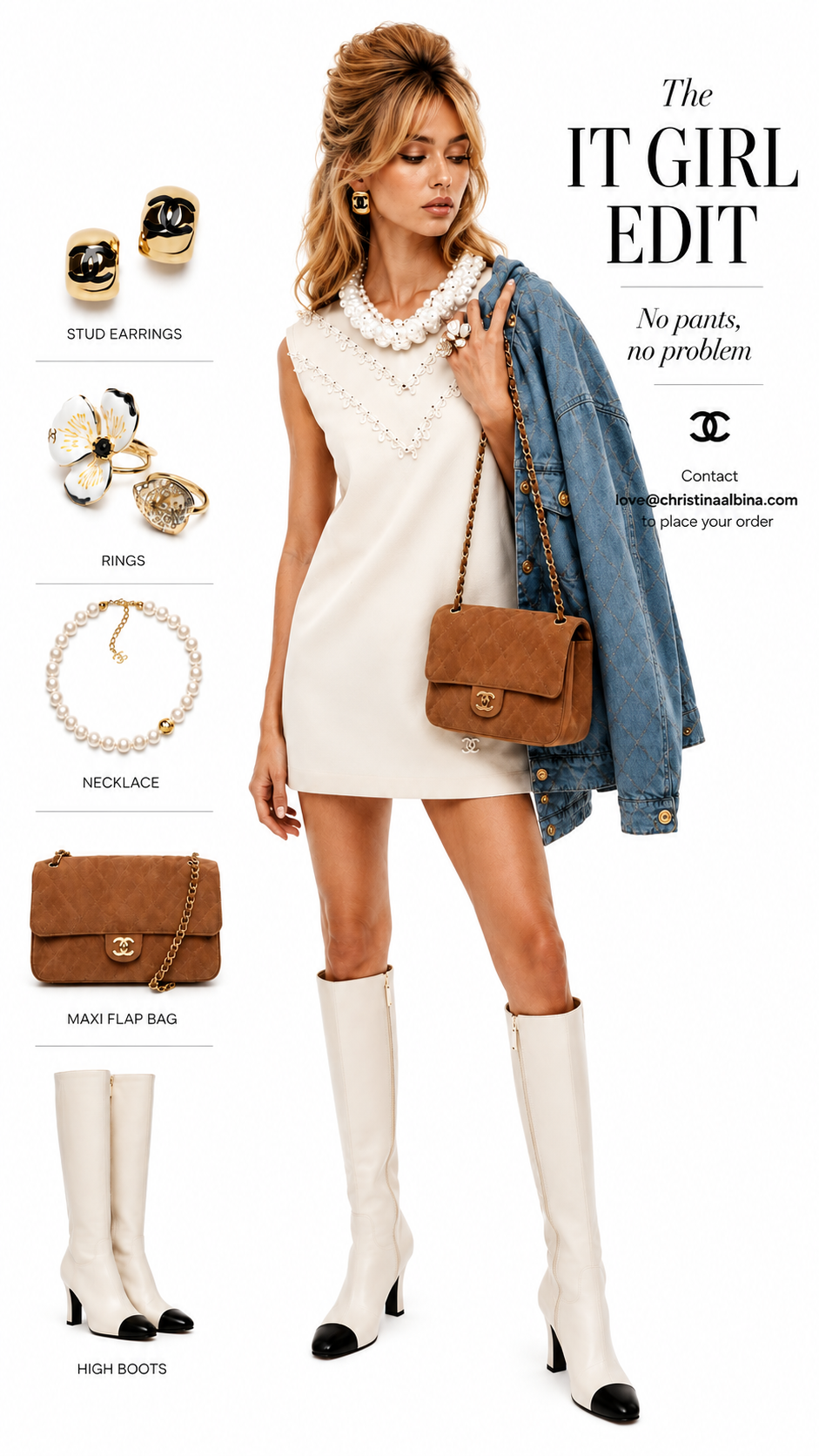
Curated by Christina | Chanel Fall 2026
Chanel on Top, Hermès in the Lead
Two houses, two different kinds of winning.
Chanel is the most-searched brand in luxury resale this year — ahead of Louis Vuitton, Prada, Gucci, and Miu Miu. That is demand: the sheer number of women looking for the double C. And demand has a story behind it: since Matthieu Blazy was named creative director, searches for his name are up more than 10,000%. A new hand at Chanel has historically been the best thing that can happen to vintage Chanel. Collectors go back to the archive to understand what he is inheriting, and the archive gets more expensive.
There is a reason a hedge fund now exists solely to trade Hermès bags — Luxus, founded by a Blackstone alum, holds Birkins and Kellys the way other funds hold gold. Hermès plays a different game. It is not the most searched; it does not need to be. On value retention, Hermès reclaimed the top spot in Rebag’s latest Clair Report, its bags reselling at an average of 138% of retail. Read that again: the average Hermès bag resells for more than it cost — and at scale, no other house comes close. Chanel is the blue chip everyone wants; Hermès is the position that appreciates whether or not anyone is watching.
For the portfolio, that means both, for different reasons. Chanel is liquidity — it will always sell, fast, to someone. Hermès is compounding. If you own one Birkin or Kelly and are wondering whether to hold: the answer this year is hold.

Arguably the most popular jewelry trend right now is the chunky chain. Both gold hollow links and silver curb chain iterations have popped up in the forms of edgy chokers or statement bracelets. If you're a first-timer to chunky chains, try a shorter necklace and layer it with a few daintier styles to create a dynamic look that doesn't feel too punk nor too precious.
Layer up with this sweet simple statement piece or add a charm to the chain of your choice!
14K Hollow Link Chain
Made in Italy
Gold: The Liquid Position
In Part One I said unbranded 14k gold was among the fastest-selling categories in the shop, often gone within two weeks of listing. That was when gold was expensive. It is now historic.
Gold traded at $4,674 an ounce at the end of August — up more than $1,300 from a year ago, and at all-time highs. Every gold chain, charm, ring, and hoop in your jewel box has appreciated without you doing a thing. This is the rare category where the intrinsic value and the design value move together: a 1970s Italian chain is worth more as an object and more as metal, at the same time.
This is why I keep telling clients that gold is the cash position of the closet. It is the piece you can sell in a week if you need to, and the piece that holds its floor when trends move. If you are going to add one thing to the portfolio this fall that is not a handbag, make it real gold — vintage, substantial, unbranded is fine. The market does not need a logo to price it.
◆
Shop by Era, Not by Brand
Here is the shift I find most interesting, because it changes how I source and how you should buy.
Searches for 2000s fashion are up 93% this year. Decade-specific searches — women saving a search for "1990s," "Y2K," "early 2000s" — are up 135%. The buyer is no longer walking in and asking for "a Dior bag." She is asking for a Galliano-era Saddle, a 2003 newsprint, a Tom Ford Gucci from the years that mattered. She shops by chapter.
This is a gift to anyone who owns pieces with a date attached. Era is provenance, and provenance is what separates a $900 bag from a $3,000 one. When you list, when you consign, when you describe a piece to a buyer — name the decade. "Early-2000s Dior Saddle" will outperform "Dior Saddle" every time, because it is what she typed into the search bar.
And the era to be holding right now is Y2K and the early 2000s. The market has stopped buying by house and started buying by creative director — the specific years, the specific hand. Phoebe Philo's Céline (searches up 650%), Ghesquière's Balenciaga (up 400%), early Marc Jacobs Louis Vuitton (up 375%). Searches for 2000s fashion overall are up 93%. These are not trends. These are positions.
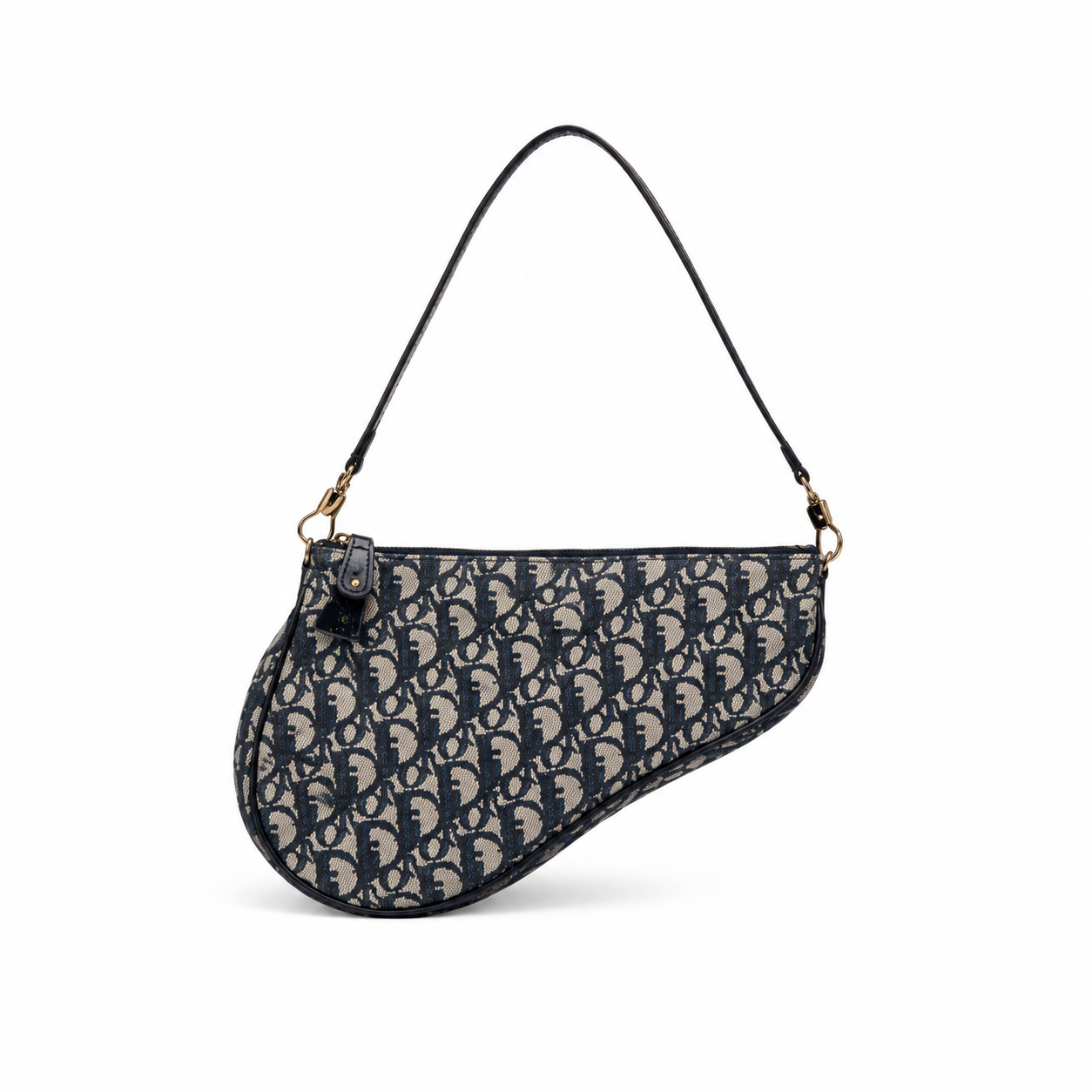
An icon, full stop. This vintage Dior Saddle Mini from the coveted 2003 era (hello, John Galliano magic) features the instantly recognizable Diorissimo monogram in a classic blue canvas with leather trim and gold-tone hardware. It’s that perfect “cool girl archive” piece—equal parts nostalgic and forever relevant.
Condition: Very Good to Excellent (based on visible scale)
Color: Blue Diorissimo
Material: Canvas with leather trim
Hardware: Gold-tone
Closure: Zip top
Strap: Single shoulder strap
Measurements:
• Height: 6”
• Width: 8.5”
• Depth: 1.25”
• Strap drop: 6.5”
Perfect for: collectors, vintage lovers, or anyone building a serious It-girl archive
• Styled by Christina
• Rare vintage find
• Effortless, iconic luxury
Christina’s Style Tip: Pair this with low-rise denim, a sharp blazer, and a barely-there heel—very early 2000s Dior, very “I know exactly what I’m doing” 🖤
The Jeweled Box: Asymmetry Is a House Code
Every season the jewelry conversation gets reduced to a trend word, and this fall the word is asymmetric — the single drop earring, the necklace that sits off-center, the piece that refuses to match. I would like to reframe it.
In 1879, Frédéric Boucheron designed the Point d'Interrogation — the Question Mark necklace — the first high jewelry piece with no clasp. It curved around the neck, held itself in place, and let a woman put on and take off her own jewels without a maid at her shoulder. Asymmetry was the point. The necklace followed the body, not the other way around. This year Boucheron revived it in a white gold ivy version — 2,600 hours of work, sections that detach into a collar, a brooch, a hair ornament.
So when you see an off-kilter neckline or a single sculptural earring this fall, understand what you are looking at: a 147-year-old idea, not a six-month one. The Jeweled Box has always leaned into this — the single-shoulder collar, the draped chain that pools to one side, the pair of earrings that were never a pair. Buy asymmetry as a house code and it never goes out of style. Buy it as a trend and you will resell it in a year.
◆
The Fur Conversation
I want to address this directly, because you are going to hear about it this month.
Beginning with this September's shows, the CFDA has ended the use of animal fur at New York Fashion Week — mink, fox, rabbit, karakul, chinchilla, coyote, raccoon dog. It is a policy about new fur: pelts from animals farmed or trapped today. It says nothing about the vintage fur that already exists, and that silence is where the conversation gets interesting.
My position, so you have it before you ask: I do not source or sell new fur, and I never have. Vintage is a different question — the animal was not harmed for this season, and the alternative to a well-kept 1960s coat finding a next owner is a landfill. I handle it with full disclosure, honest condition notes, and respect for the fact that some of my clients will never wear it, and some will only ever wear it vintage. Both are right.
What I will tell you as a market read: when new supply ends, existing supply becomes more precious, not less. The best vintage fur — named furriers, exceptional condition, silhouettes with a lineage — is a category I expect to become rarer and more valuable over the next few years, even as it becomes more delicate to talk about. If you own it, keep it well. If you are considering it, buy only the best, and buy it from someone who will tell you exactly what it is.
◆
On the Wrist: The Recovery Play
And then there is the wrist. Watches spent three years in correction after the 2022 mania — the flippers left, the tourists left, and quietly, the market repriced. That correction is over. Patek’s secondary index is up 18% in a year; Rolex and Cartier are each up 9%; and this spring, Phillips ran the highest-grossing watch auction in history — $96 million in one Geneva weekend, 43 world records. What makes this rally different from the last one is who’s driving it: collectors, not speculators. Supply of the references that matter is actually shrinking.
For the portfolio, watches are the recovery play — the position you buy after the correction, not before it. My pick for this reader is not the steel sports watch every man in finance is chasing. It is Cartier. Vintage Cartier is where the youngest money is moving, and the Panthère was just named the smartest watch investment in resale. A gold watch that reads as jewelry, in a year when gold itself is repricing everything — that is not an accessory. That is an allocation.