
The Portfolio Series
There are exactly two handbags that hold their value. Everything else is a very beautiful expense.
I bought my first Chanel at nineteen. Not because anyone told me it was an investment — nobody talked like that then — but because my grandmother had walked me into that house when I was two years old and I never really left. What I didn't know, standing at that counter, was that I'd just made the smartest purchase of my twenties. I know it now. I've spent two decades inside the luxury market, on the selling floor and in the resale back rooms where the real numbers live, and I've watched thousands of bags come through the door. The ones that come back worth what you paid — or more — are the same two names. Every time.
So let me say it plainly, because the industry has spent a lot of money making sure you never hear it plainly: a handbag is blue chip, or it is not. And only two are.
The Chanel Classic Flap
The bag that taught the market how to appreciate.
The flap is the closest thing fashion has to a stock that only moves one direction. Chanel raises its prices — regularly, deliberately, and without apology — and every increase lifts the floor under every flap that already exists. The medium you bought in 2010 has been repriced upward by the house a dozen times since, without you lifting a finger. There is no other object in your closet that works this way.
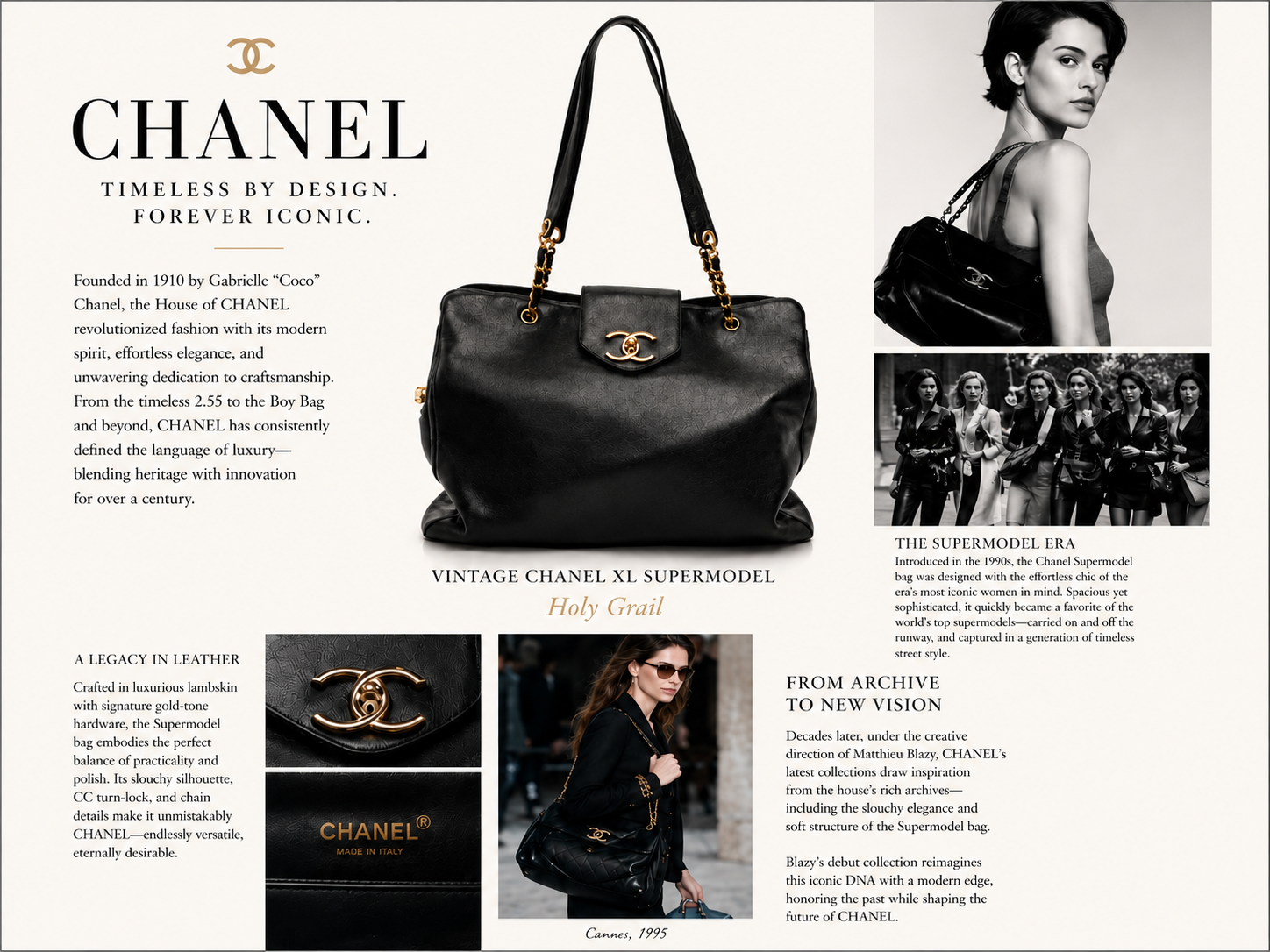
And the vintage pieces are the quiet geniuses of the category. A nineties flap in lambskin or caviar with twenty-four-karat-plated hardware — the gold is warmer, the quilting puffier, the leather heavier than anything in the boutique today. Collectors know this. Which is why a well-kept vintage flap now trades at or above what a new one costs, and keeps climbing. This is the silhouette I tell every private client to anchor on before she buys a single other bag.
The Hermès Kelly and Birkin
Scarcity, made by hand, as a business model.
Here is the fact that stops people at dinner parties. A Birkin now costs more than a bar of gold. Read that again. And there is a private-equity firm — a real one, with real investors — that exists solely to buy and hold Birkins the way other funds hold property or bonds. When the financial world builds a vehicle around your handbag, the handbag has stopped being a handbag.
Why does it work? Because Hermès makes fewer than people want, every year, forever. One artisan, one bag, start to finish. You cannot walk in and buy one; you are offered one. That friction is the entire point, and it's why a Kelly or Birkin on the resale market routinely trades above retail — the premium is the price of skipping the wait. The Kelly, for what it's worth, is the one I'd reach for first. More structure, more history, and it's the quieter flex of the two.
The Bag That Doesn't Make the Cut
And I say this with love.
The Lady Dior. I adore it. The cannage is one of the great surfaces in fashion, the charms are a love letter to the house, and on the right woman it is pure elegance. But it is not blue chip, and I won't tell you it is just because it sits at a similar price. Dior produces it in volume, in seasonal colors and finishes that date themselves, and the resale floor reflects that — a Lady Dior holds some of its value, but it does not appreciate. You are buying beauty, not a position. That's a perfectly good reason to buy a bag. Just know which reason it is.
The same goes for the rest of the it-bag carousel — the Loewe, the Bottega, the Row totes everyone's carrying this season. Wonderful bags. Wear them, love them, carry them into the ground. But in my portfolio framework they are Growth at best and Liquid most of the time. They are not the thing you buy when you want your money back.
How to Buy Blue Chip
The rules I give every client before she spends a dollar.
- Classic over seasonal. Black. Caviar or lambskin. Gold or silver hardware. The limited-edition colorway is a love story; the black medium is a retirement account.
- Vintage over new. Better leather, better hardware, better price, and it's already proven it holds. Resale is where the blue-chip market actually lives.
- Condition is everything. Corners, chain, interior. A flap in excellent condition and one in fair condition are two different asset classes.
- Keep the box, the card, the dust bag. I know it feels fussy. It is also several hundred dollars in resale value, every time.
- Buy one you'll actually carry. This isn't a vault strategy. The bag appreciates whether or not you use it — so use it.
The Other Side of the Ledger
Because a portfolio works both ways.
If you're reading this with a flap in the closet you haven't carried in two years, or a Kelly that lives in its orange box — you are holding an appreciated asset in a seller's market. December is when the buyers come looking, and they come looking for exactly these two names. I place them privately, I price them from twenty years of knowing what the market will bear, and I do it quietly. If you've been thinking about it, this is the month to stop thinking.
Two bags. That's the whole list. My grandmother knew it, I learned it at nineteen, and the market has spent every year since proving us both right.
◆ ◆ ◆Worth keeping forever.