
The Chain That Holds CHANEL Together
On the architecture of the Chanel suit, the invisible weight that makes it hang, and the white shirt that just inherited it.
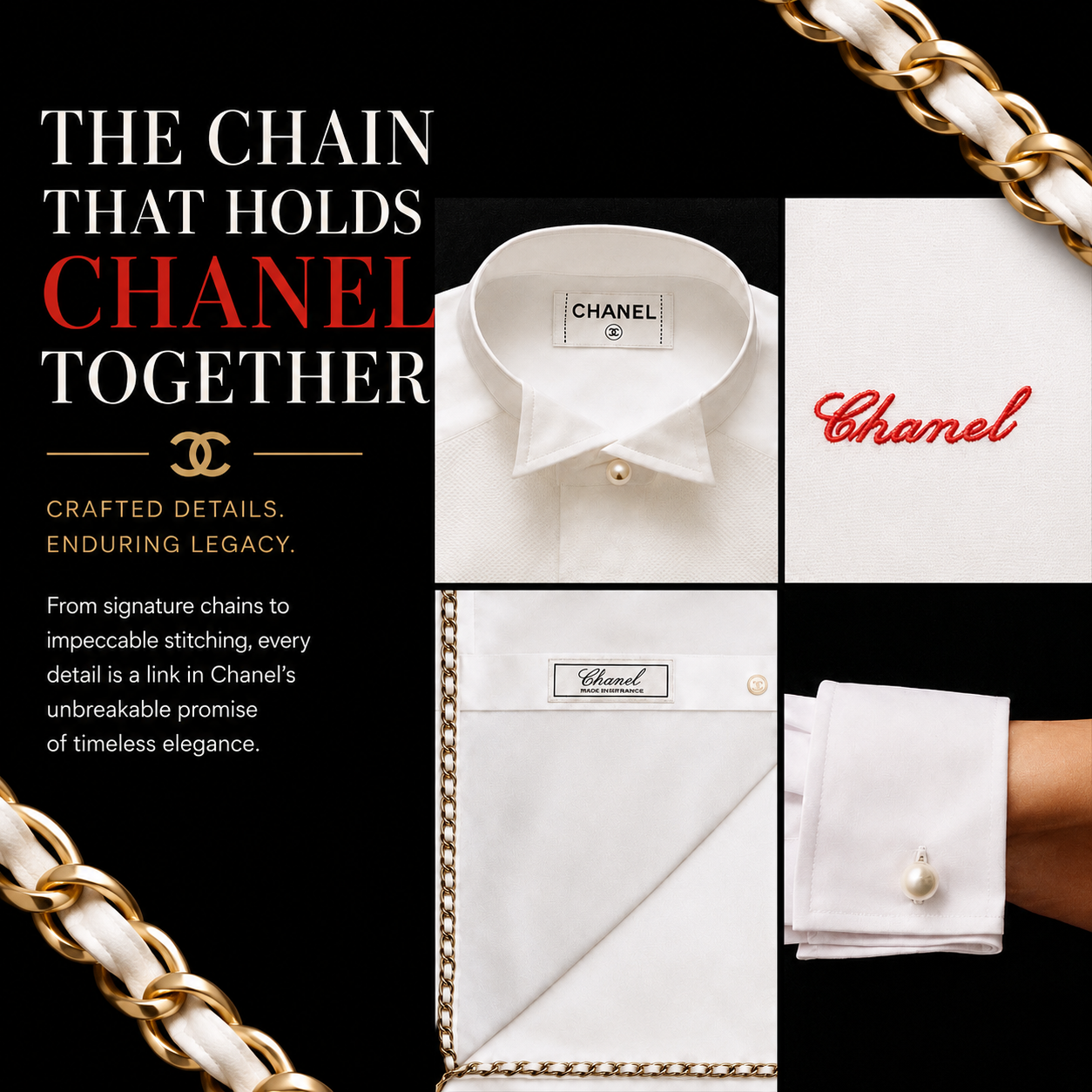
There is a length of gold chain sewn inside the hem of nearly every Chanel jacket ever made. You will never see it on a body. It has no logo. It is not a signature in the way the camellia or the interlocking C is a signature. It exists for one reason, and the reason is gravity.
Everything else about that jacket is famous. The chain is the part that actually works.
I have been thinking about it all week, because Matthieu Blazy has just done the most interesting thing anyone has done with the house's codes in forty years. He took the chain out of the jacket and sewed it into a shirt. And every fashion girl I know is now hunting that shirt without quite being able to say why it feels different from every other white button-down she already owns.
So let's go back to the beginning, and then forward again.
Before the tweed, there was a borrowed collar
The first thing Gabrielle Chanel stole from a man was not a tweed jacket. It was a shirt. The house says so itself, in the product copy for this season's tuxedo shirt: the shirt was the first garment she borrowed from menswear. Before jersey. Before the suit. Before No. 5.
Then came Deauville, and jersey — a knit then used for men's underwear — cut into sportswear for women who wanted to move. Then came the Duke. Her long romance with Hugh Grosvenor, the 2nd Duke of Westminster, beginning around 1924, put her in London, Cheshire and Scotland, hunting and riding and fishing in his clothes. She liked his tweed jackets more than she liked most of the season's couture. So in 1924 she went to the source: William Linton, in Carlisle, and asked him to weave something lighter and softer than anything he was making for men. Linton is still weaving for the house a hundred and two years later.
This is the pattern, and it never changes. She does not invent a fabric. She finds a man's fabric, makes it lighter, and gives it to a woman who intends to leave the house.
1954, and the room that went silent
February 5th, 1954. She is seventy, she has been gone fifteen years, and the room is full of buyers and editors from Paris, London and New York who have queued for a seat.
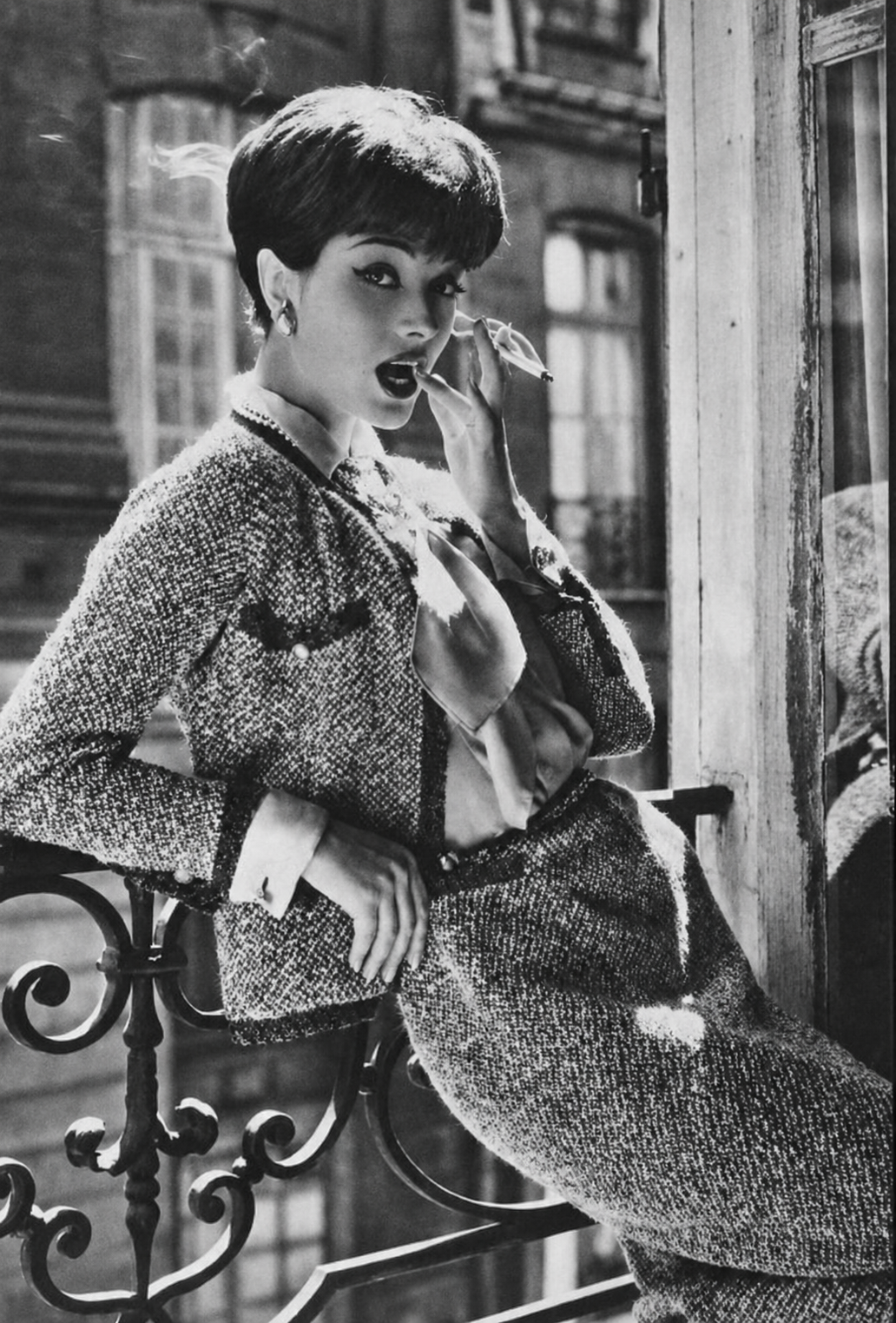
They sat in near-total silence. The French press was cool; some of it was openly dismissive. What she had shown them was a soft, collarless, unfussy suit at a moment when Dior's New Look had put the waist back in a corset and the skirt back over a crinoline. Vogue's editor later summed up the mood she was reacting against: femininity had become so elaborate that a woman needed trunks to travel and a lady's maid to assemble her.
America said yes immediately. So did Hélène Gordon-Lazareff at Elle, who understood before almost anyone in Paris what an easy suit could do for a reader who had a job.
And the suit that came back in 1954 was not the suit of the 1920s. It was more refined, more exactly engineered — and it had metal chains sewn into the hems so the garments would fall perfectly. That detail has stayed on nearly every Chanel jacket since.
The anatomy, from the inside out
If you only ever learn one garment's construction, make it this one. It will teach you how to shop everything else.
NO COLLAR The neckline sits flat and open at the throat. Nothing to crush, nothing to fight your jaw, nothing to date the jacket to a decade.
A HIGH, NARROW ARMHOLE Cut small and set high on the shoulder, with a generous sleeve hung inside it. Menswear tailoring logic: your arm goes up, the body of the jacket stays exactly where it was.
PANELS, NOT PLANES The front, back and sleeves are built from multiple narrow strips rather than two large pieces. It is why the drape reads sculpted — and why a good tailor can bring an archive jacket to your body without destroying its line.
A LINING THAT ISN'T REALLY A LINING Silk, quilted by hand directly to the tweed so the two layers travel as one cloth. Her rule was that the inside should be as finished as the outside.
BRAID DOING STRUCTURAL WORK
The trim runs the neckline, the front opening, the pockets, the cuffs and the hem. It looks like decoration. It is finishing and stabilising edges that would otherwise require stiff interfacing — the thing she was trying to eliminate.
BUTTONS THAT BUTTON
Real worked buttonholes, every one, even the three on the back of each sleeve.
AND THE CHAIN
Brass or heavy metal, hand-stitched into the hem in place of the lead weights traditionally hidden in tailored jackets. Its finish matches the buttons: gold outside, gold inside.
Read that list again and notice what is missing. No boning. No shoulder pad doing the shaping. No canvas chest piece. Most tailoring achieves structure by adding stiffness — armour, essentially, built around a body. She refused all of it and reached for weight instead.
She did not build a structure around the woman.
She let the jacket fall, and used gravity as the tailor.
That is the whole argument of her career, expressed in eight inches of curb chain. Twelve grams of brass does what a corset was doing, and the woman wearing it can raise both arms over her head.
How the shape has moved
1954–1971, her own hand. Hip-length, boxy, a skirt to the knee. Worn as a uniform, repeated season after season with almost no variation, because the point was never novelty.
1983, Lagerfeld. He cropped it, shortened the skirt to nothing, and blew the codes wide open — tweed in denim, tweed deliberately frayed, tweed over bike shorts, chains stacked as jewellery on the outside where everyone could see them. It looked like irreverence. It was maintenance. He kept the jacket alive for thirty-six years by refusing to treat it as a relic.
Virginie Viard. Softer, looser, the shoulder brought down, the whole thing eased toward something you could actually live in on a Tuesday.
Matthieu Blazy, from October 2025. His debut opened with a plain, square-shouldered grey trouser suit and ran through tactile bouclé, very fine tweeds, artfully frayed hems and supple leather. Raw-edged jackets borrowed straight back from menswear. A 2.55 shown crushed and cherished, its burgundy lining on view. He is not quoting the codes. He is going back underneath them, to the engineering.
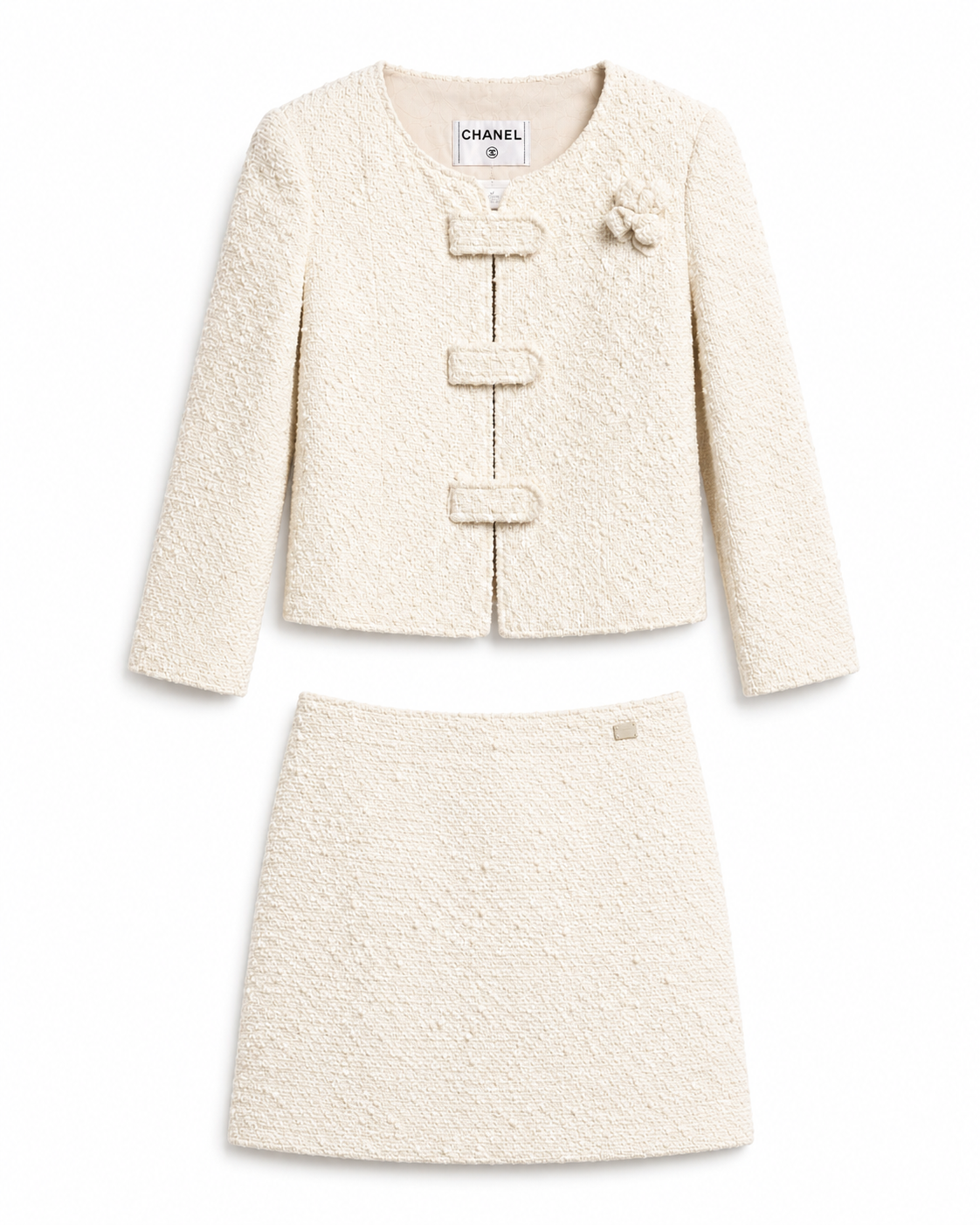
Which brings us to the ivory suit at the top of this page, and what it is really telling you: round neck, no collar, three tweed-bound tabs instead of gilt buttons, a camellia at the shoulder, a mini instead of a knee-length skirt. It is the 1954 pattern with the volume dialled down and the hardware nearly removed. The structure is doing all the talking.
The chain migrates
Here is the thing everyone noticed this year and almost nobody named.
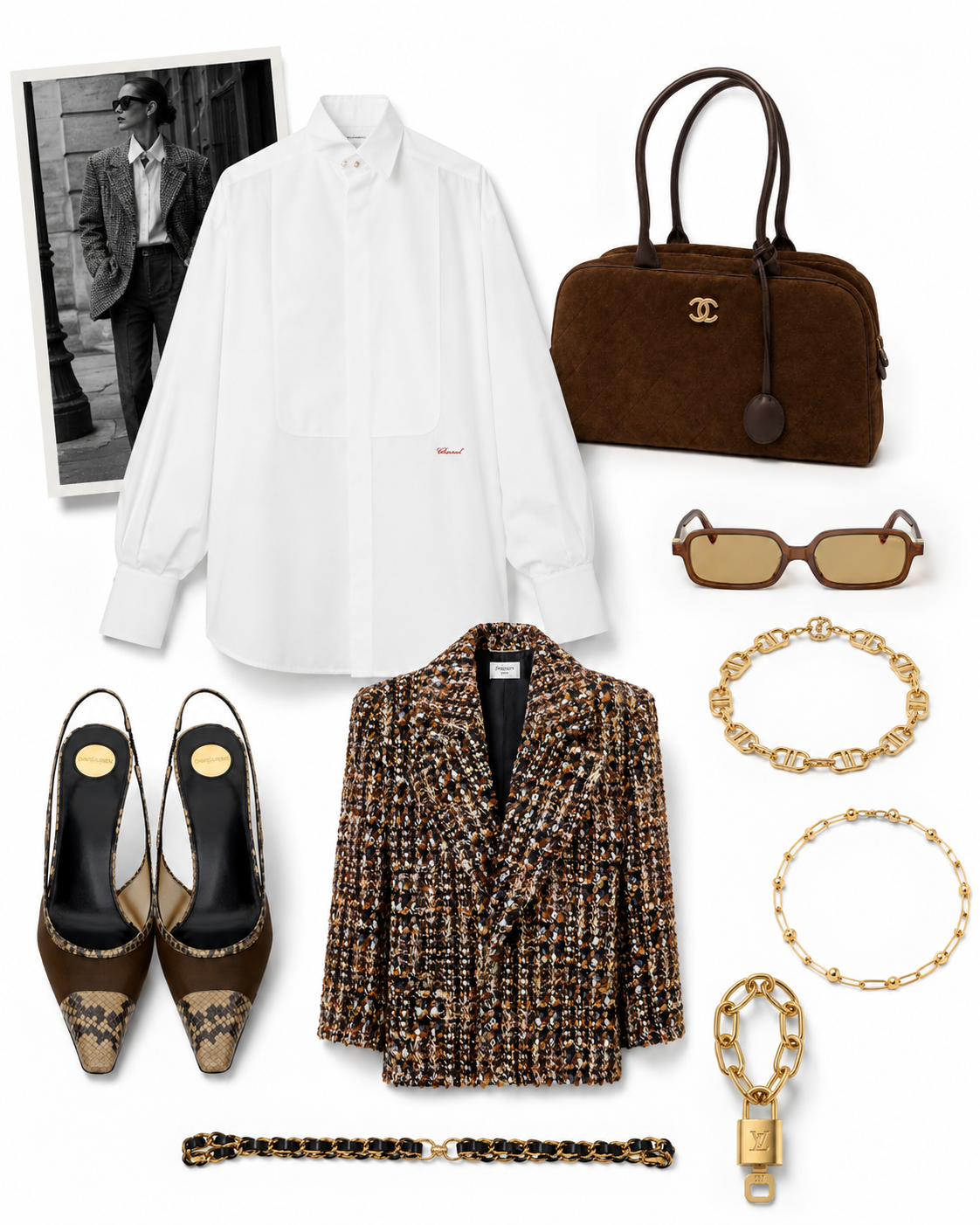
For Spring Summer 2026, Chanel went to Charvet — the Place Vendôme shirtmaker, the oldest of its kind in the world — and made a tuxedo shirt carrying the house's signature chain and a pearl button. The house's own description of the piece opens by reminding you that the shirt was the first thing Gabrielle Chanel ever borrowed from a man.
Look at the hem in the detail plate below. That is the same chain, doing the same job it has done inside the jackets since 1954, in a garment that weighs a few ounces.
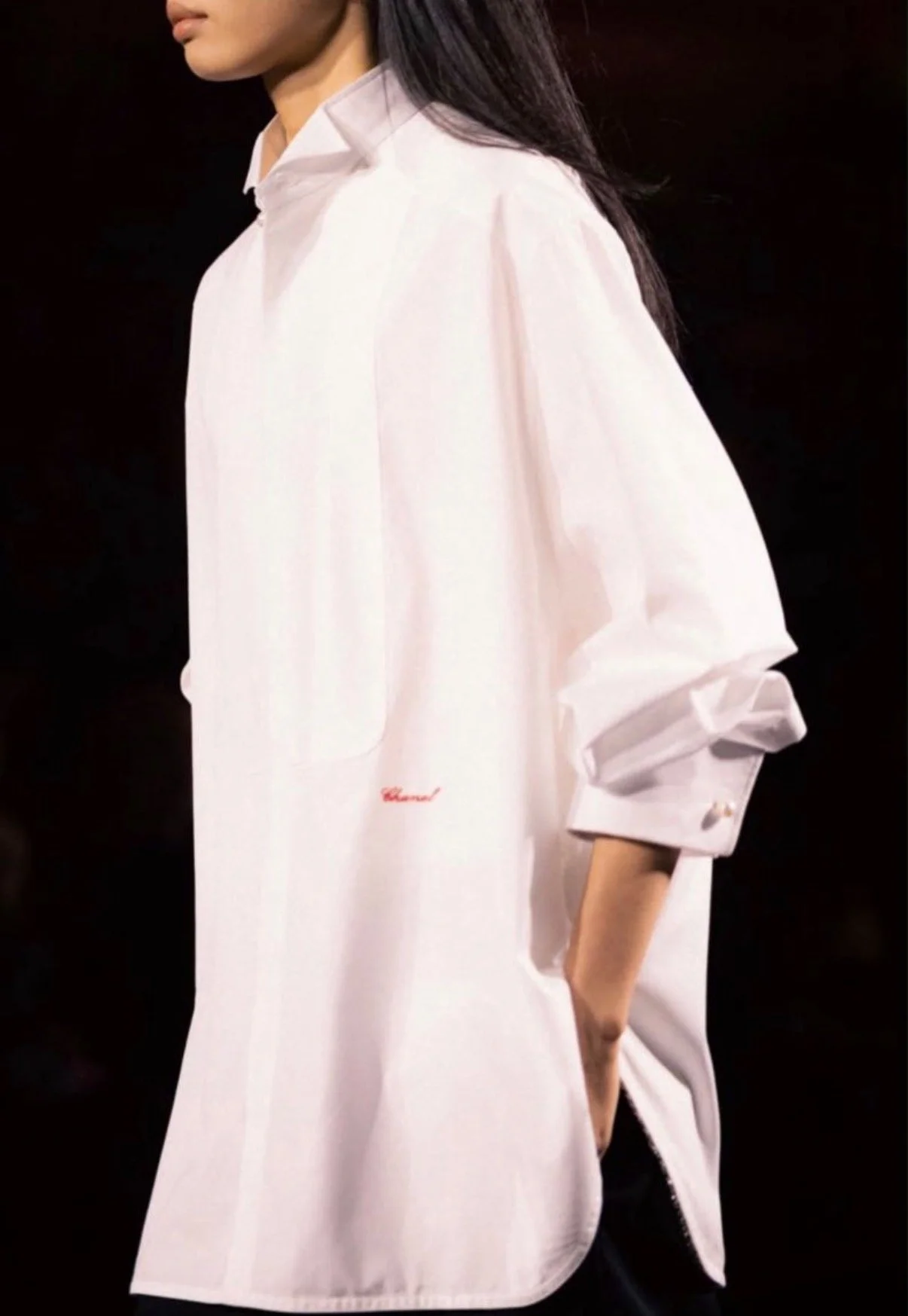
The numbers, since you'll ask. Around $4,350. Sold out on arrival. When it landed in American stores it went straight into the 57th Street window in New York, and the tuxedo shirt displaced the ordinary poplin button-down at the top of the food chain more or less overnight.
It is a very expensive white shirt. It is also the only white shirt I have seen in a decade that has an idea in it.
And then in January, at his first couture collection, he went further. The show opened with a nude chiffon interpretation of the classic tweed suit — translucent layers held together by fine chains and pearls sewn into the hems. The tweed gone. The braid gone. The camellia gone. The chain remaining, now visible, now the only thing holding the garment on the body at all.
He stripped the house down to the one element that was never decorative, and showed you that it had been the real signature the whole time.
Softness, in the hand
The same argument is happening in the accessories, and it is the reason I would spend fall money on suede over lambskin this year.
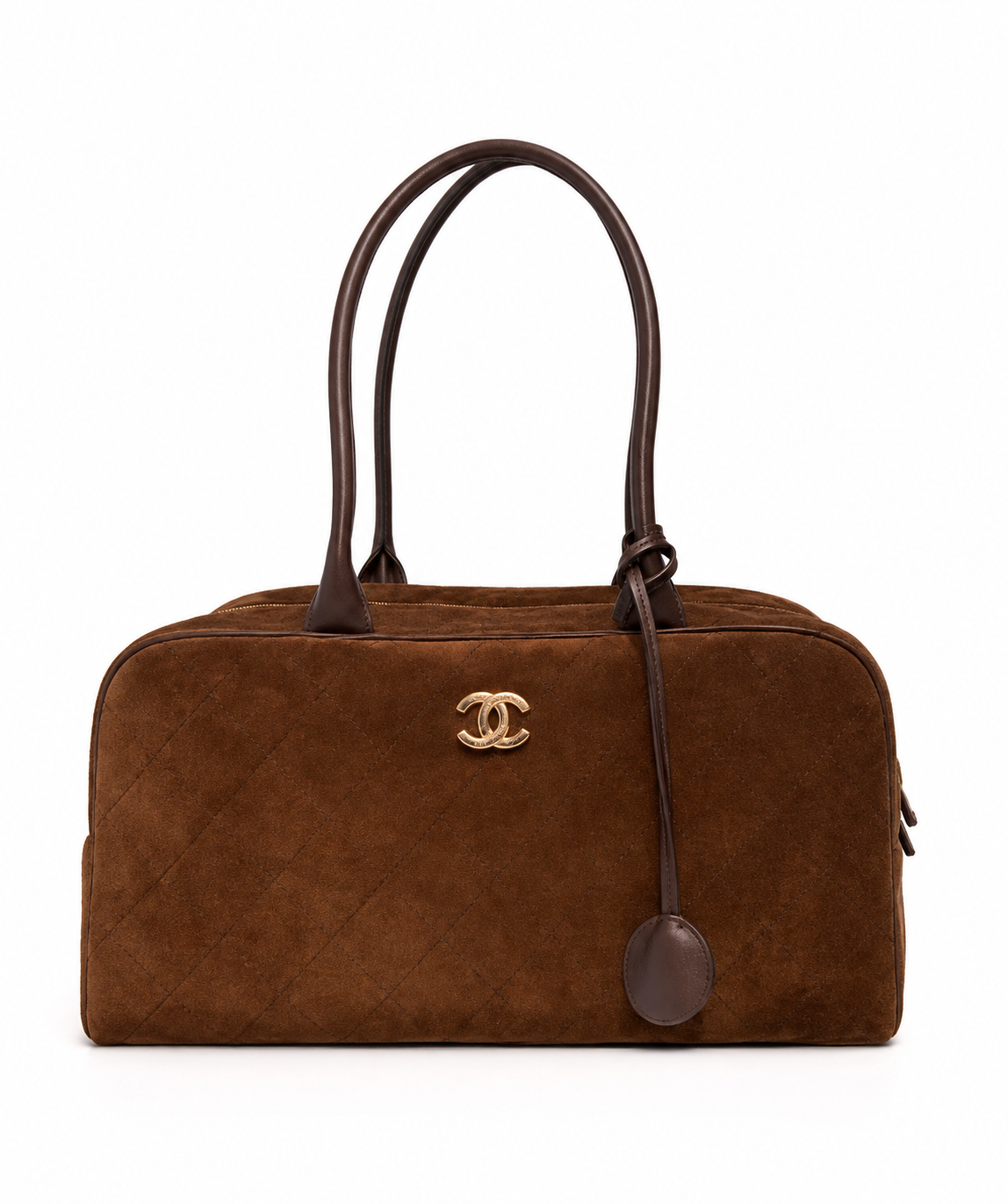
COGNAC SUEDE, QUILTED, WITH A LEATHER BELL CHARM KNOTTED TO THE STRAP. THE NAP ABSORBS LIGHT WHERE LAMBSKIN THROWS IT BACK.
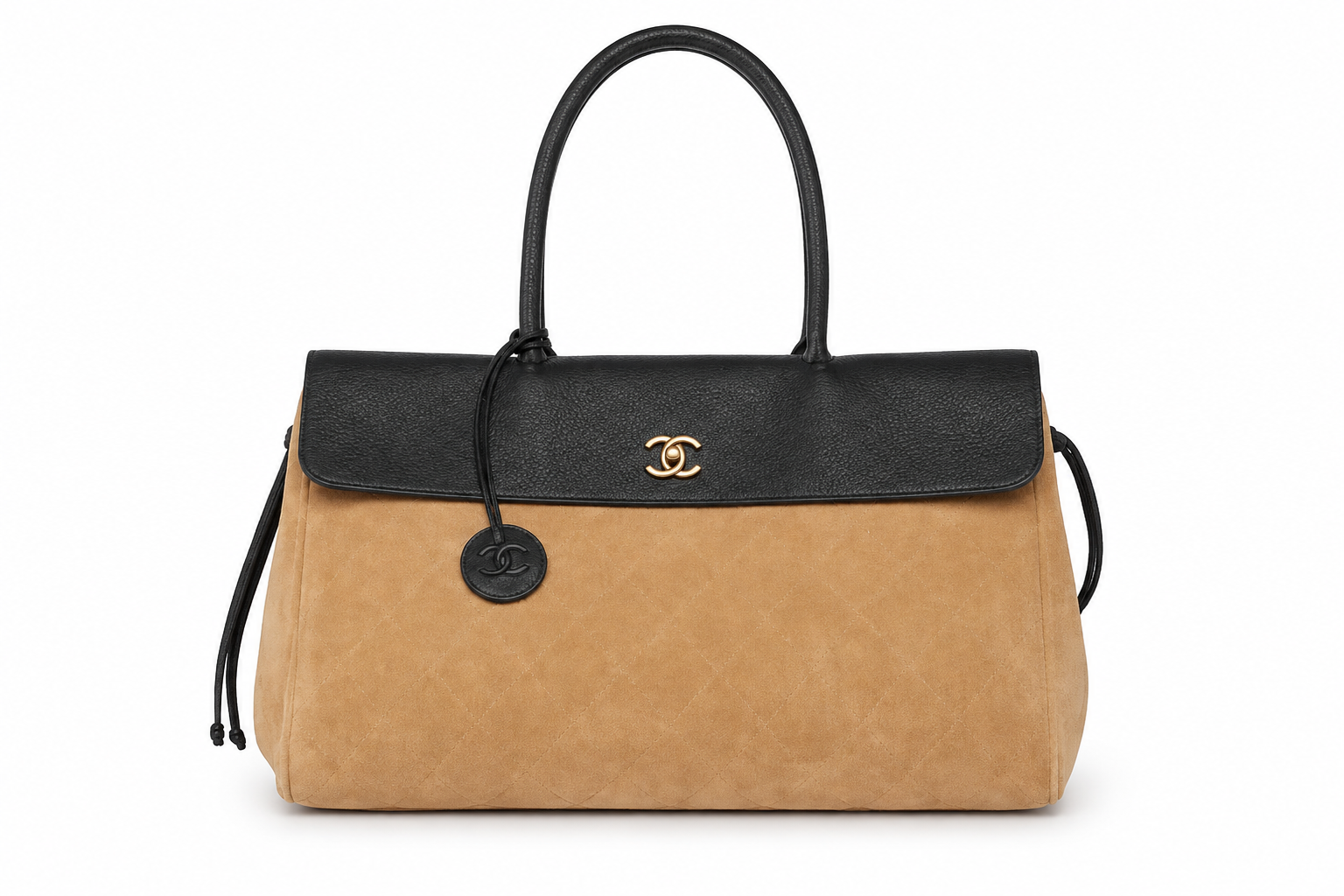
Olive. Cognac. Camel under a black grained flap. Quilting rendered in nap instead of lambskin, which changes everything about how it behaves in a room — matte, absorbing the light rather than bouncing it back at everybody. A suede bag tells you its house from three feet away instead of thirty.
That is the same instinct as the chain. Structure and identity carried by something you have to be close to notice. If you are buying one piece this fall that will still read as current in ten years, make it soft, make it brown, and make it quiet.
If you are buying archive
All of this is useful the moment you are standing in front of a rack with a jacket in your hands and forty seconds to decide.
TURN IT INSIDE OUT FIRST
Find the chain. Hand-stitched along the hem, finish matching the button metal. It is the fastest structural tell there is, and it is the one most reproductions skip because it costs money and nobody sees it.
Check that the lining is quilted tothe tweed, not hanging free inside it. If the silk floats independently, you are not holding what you think you are holding.
Count the panels. Narrow strips, not two big pieces. More seams mean more room for a tailor to work.
Open a buttonhole. Worked, not decorative. Including the sleeve buttons.
A jacket that has lost its chain has lost its hang. It is replaceable — any good tailor can do it — but price the piece accordingly and negotiate.
ON THE SHIRT, SPECIFICALLY
The resale market will fill with it by spring. Expect the first wave from people who bought it as a trend rather than a garment.
What holds value is the Charvet construction and the chain — not the red embroidery, which is the part the internet fell for and the part that will be copied hardest and fastest.
Buy the version with the chain in the hem. If it is not there, it is a nice shirt. It is not this shirt.
And then a woman gets married in it
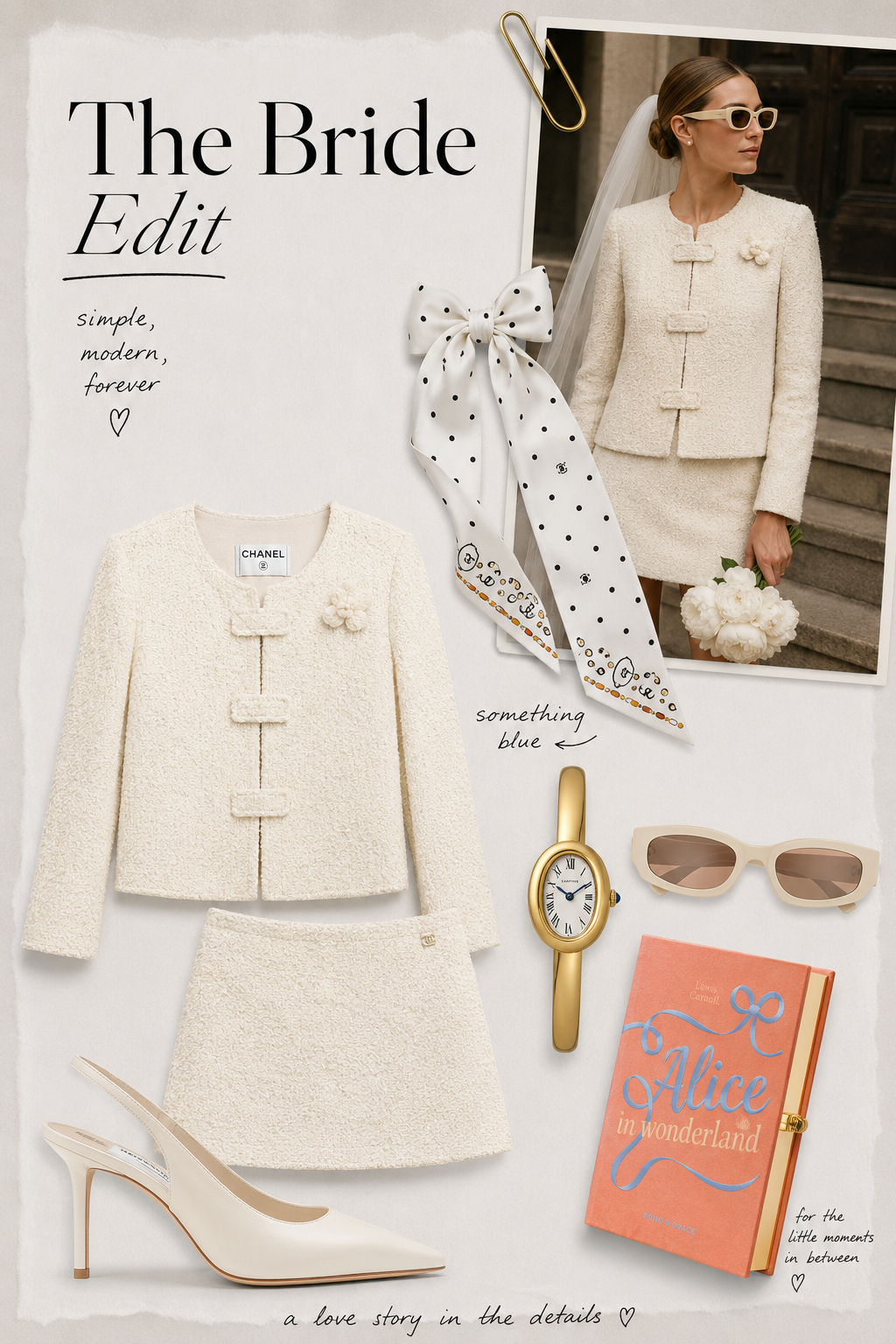
The suit that Paris sat in silence for in 1954 — too plain, too easy, too much like something a woman would choose for herself — is now what she walks down the aisle in. Ivory bouclé, a mini, a ribbon in place of a veil, a slingback, and nothing that needs a maid to assemble it.
Seventy-two years to go from an insult to a wedding dress. That is what happens when the structure is real.
The chain never shows.
That was always the point.
CURATED BY CHRISTINA ◆ THE EDIT