
The Language of the House
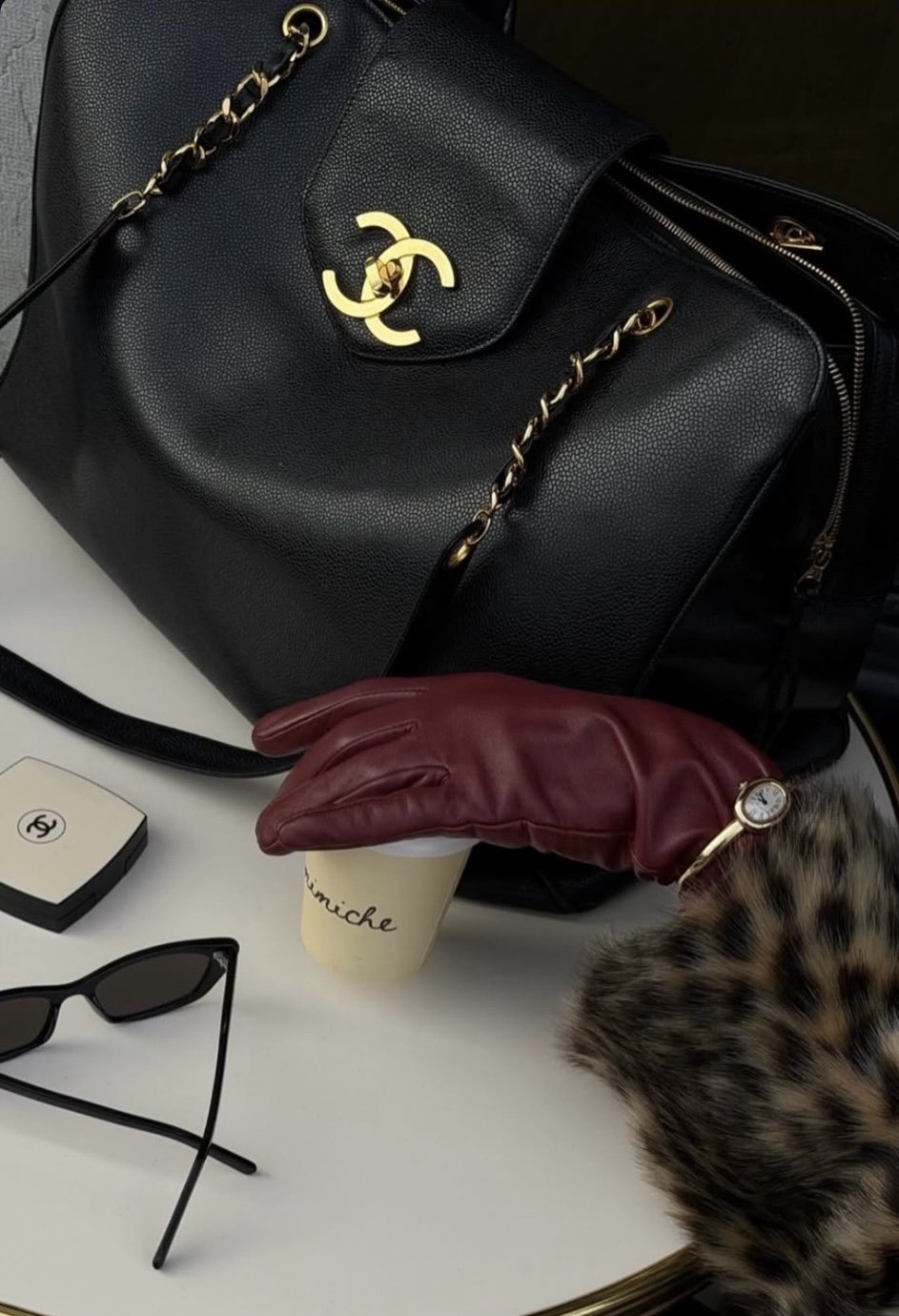
What the symbols are really saying — and why they're the safest thing you can buy.
◆ ◆ ◆
Before a house has a bestseller, it has a symbol. A creature, a flower, a print scribbled in a moment of impatience. The clothes change every season. The symbol doesn't — it just gets reinterpreted, resurrected, passed from one creative director to the next like a family secret. After twenty years of handling these pieces, I've come to think of the symbols as the real inheritance. The rest is fabric.
So consider this a field guide. Not to logos — to language.
Versace: The Woman Who Stops You
Gianni Versace chose Medusa deliberately, and he told us why: she made people fall in love with her, and there was no going back. A face that petrifies you where you stand — that is not a subtle mission statement, and Versace has never once been subtle about it. The Medusa is seduction with consequences, glamour as a form of power. When you find her on an archive belt or a vintage silk blouse, you're holding the whole thesis of the house in a single gilt face.
Chanel: The Flower That Refuses to Compete
The camellia has no scent. That's precisely why Gabrielle Chanel loved it — it would never argue with No. 5. She borrowed it from La Dame aux Camélias, a courtesan's flower, and pinned it to the most controlled wardrobe of the twentieth century. There is something deliciously subversive in that lineage, and something instructive too: the camellia is restraint as signature. It appears in tweed, in brooches, stitched into linings you'll never show anyone. The quietest symbol in fashion belongs to its loudest name.
Gucci: The House That Kept Every Talisman
Most houses choose one symbol. Gucci hoarded them — the interlocking Gs, the horsebit, the web stripe, the bee, the serpent, the star. Some are origin story: the horsebit and the green-red-green web come straight from the equestrian world Guccio Gucci outfitted in the 1930s. Others are heraldry — the bee, an old aristocratic emblem, industry and nobility in one small insect. When Alessandro Michele arrived, he didn't invent Gucci maximalism; he opened the family vault and wore everything at once. That's why archive Gucci is such rich hunting: you're not collecting a logo, you're collecting a mythology with recurring characters.
Fendi: The Print Karl Drew in Seconds
In 1965, newly arrived at Fendi, Karl Lagerfeld sketched the double-F — Fun Furs — reportedly in a matter of seconds. Then, decades later, he did something almost no designer gets to do: he revived his own artifact. The Zucca print came roaring back in the Baguette era, wallpapering the Y2K years, and it has never really left. A print born in the sixties, reborn at the millennium, trending again now — that's three generations of women carrying the same five letters of a language Karl invented before lunch.
Hermès: The Carriage With No Driver
Look closely at the Hermès duc carriage: there's a horse, a carriage, a groom waiting — and no master. The house has long implied the meaning: Hermès provides the finest equipage; how you drive it is up to you. For a house that began in harnesses in 1837, it's the perfect emblem — craft first, client sovereign. It's also why Hermès never chases. The carriage doesn't run after anyone. It waits, beautifully, and the world comes to it.
◆ ◆ ◆
Why This Matters in Your Jewel Box
Here is the collector's truth underneath all the mythology: on the resale market, symbols are what hold value. Trends soften. Silhouettes date. But a horsebit loafer, a Medusa medallion, a Zucca Baguette, a camellia brooch — these are instantly legible across decades, which means they are instantly desirable across decades. When I source for clients, I'm not just asking is this beautiful. I'm asking does this speak the language of its house fluently. The pieces that do are the ones that outlive every algorithm.
Buy the symbol. It's the part that was never for sale in the first place.
Worth keeping forever.